What is account takeover fraud prevention?
Account takeover fraud prevention protects legitimate accounts from
unauthorized use. It combines controls across login, recovery,
authenticated sessions, and sensitive actions to identify credential
stuffing, phishing, session hijacking, and other takeover methods
before they lead to account changes or fraud.
How does hCaptcha detect account takeover fraud?
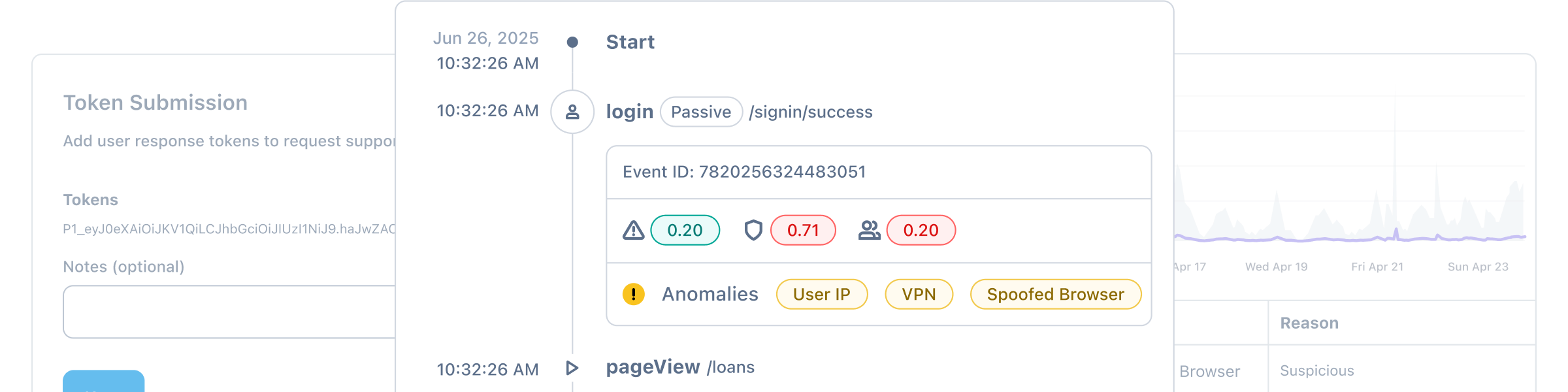
hCaptcha Enterprise evaluates behavioral, device, network, session,
and customer-provided account signals across authentication and active
sessions. These signals can identify credential stuffing and other
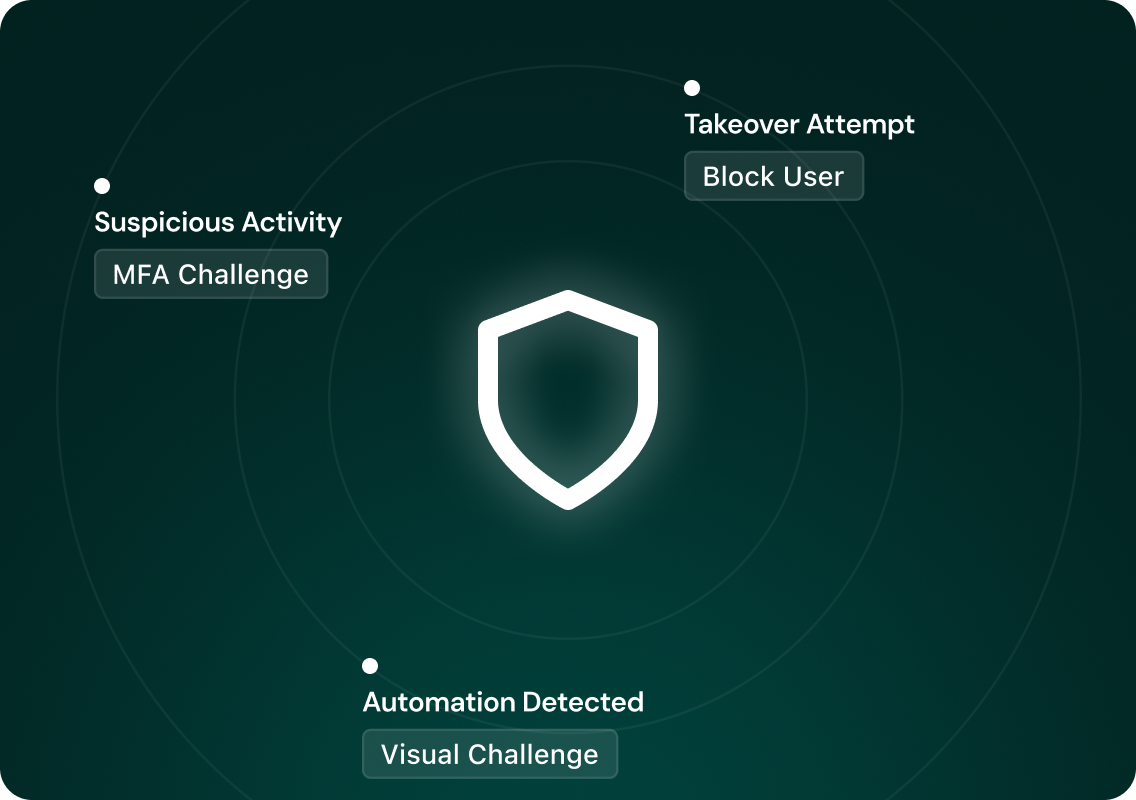
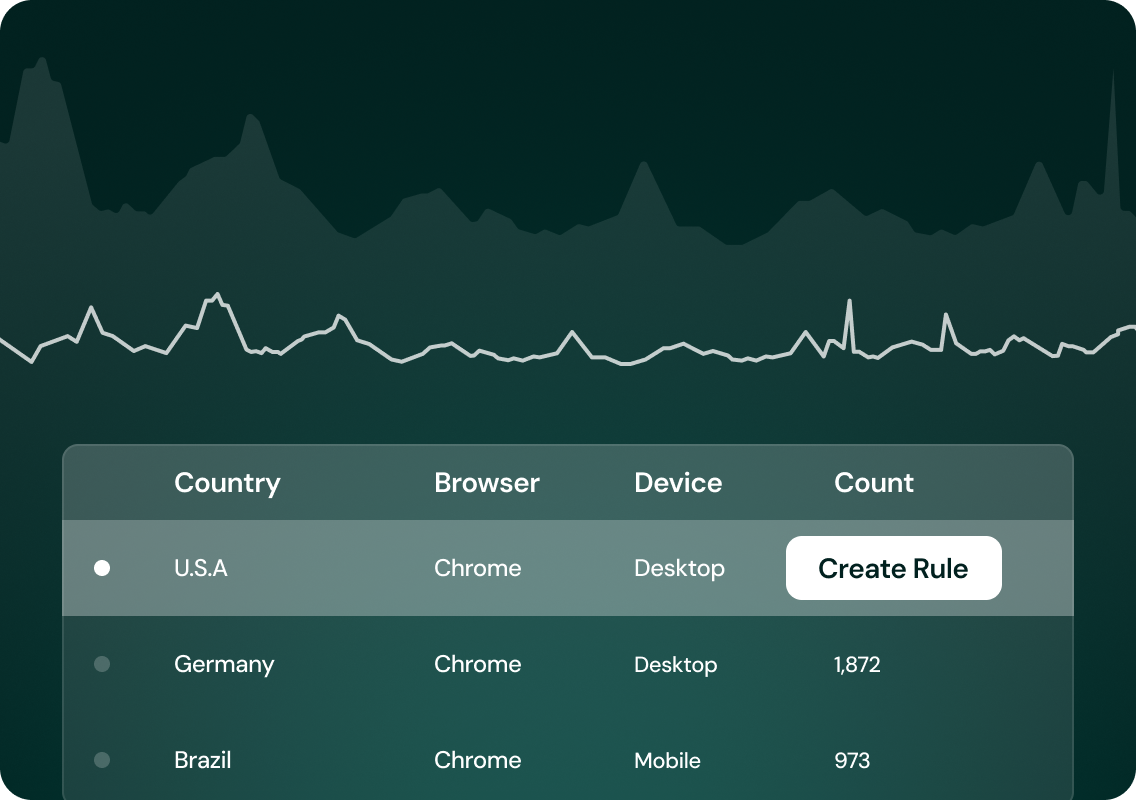
account takeover patterns. Risk scores and customer-defined Rules
Engine policies can allow, challenge, rate-limit, or block suspicious
activity.
What are the warning signs of an account takeover?
Warning signs and risk signals can include repeated failed logins,
unexpected password-reset requests, unfamiliar devices or locations,
token reuse, and sudden changes to contact, recovery, or payment
details. A single signal may be legitimate. Risk increases when
several signals appear together or develop across the same user
journey.
Is MFA enough to prevent account takeover fraud?
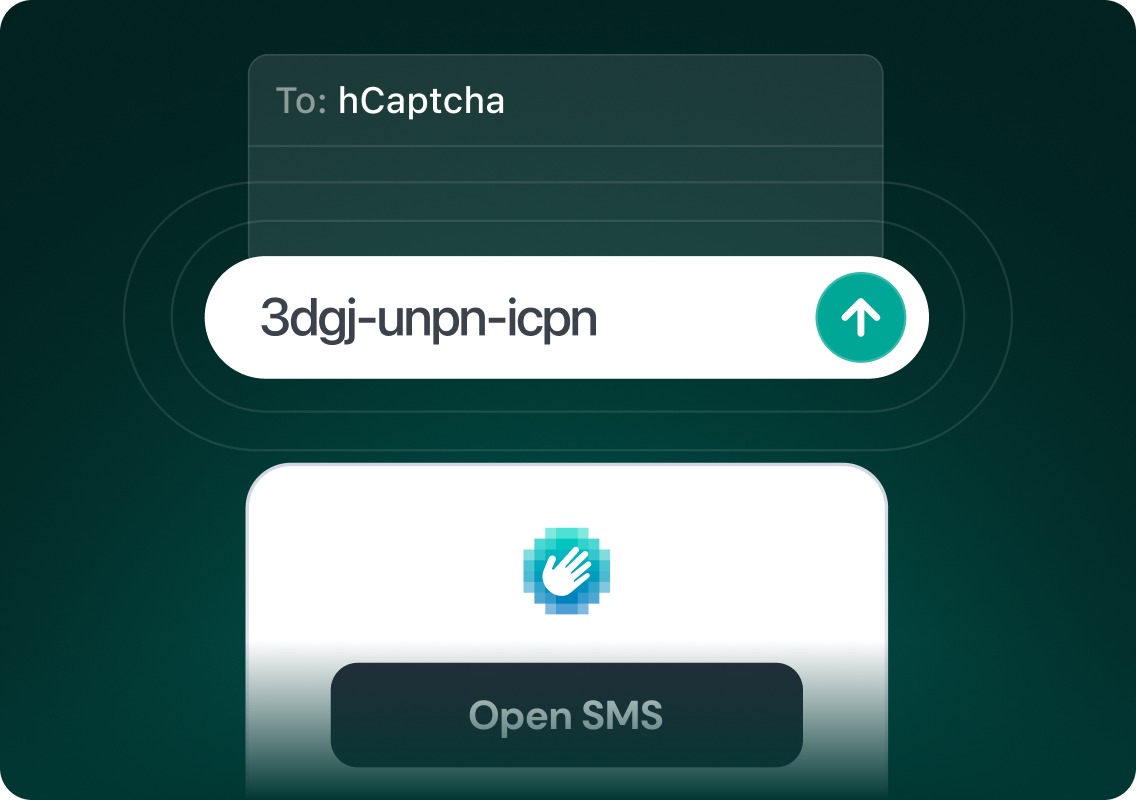
No. MFA works best as part of a layered account defense. hCaptcha's
pull-based MFA
requires the user to initiate verification, removing the outbound OTP
commonly exploited in SMS pumping and social-engineering attacks.
Carrier and device signals help detect SIM swaps, while real-time risk
signals and session monitoring identify suspicious activity before
and after login.
How does hCaptcha Enterprise support account takeover prevention with
Zero PII?
hCaptcha Enterprise supports
Zero PII deployments
that use behavioral, device, network, session, and customer-provided
account signals without sending hCaptcha raw personal identifiers.
Customers control the data they send and can pre-blind identifiers
before they reach hCaptcha.
How does account takeover prevention affect legitimate users?
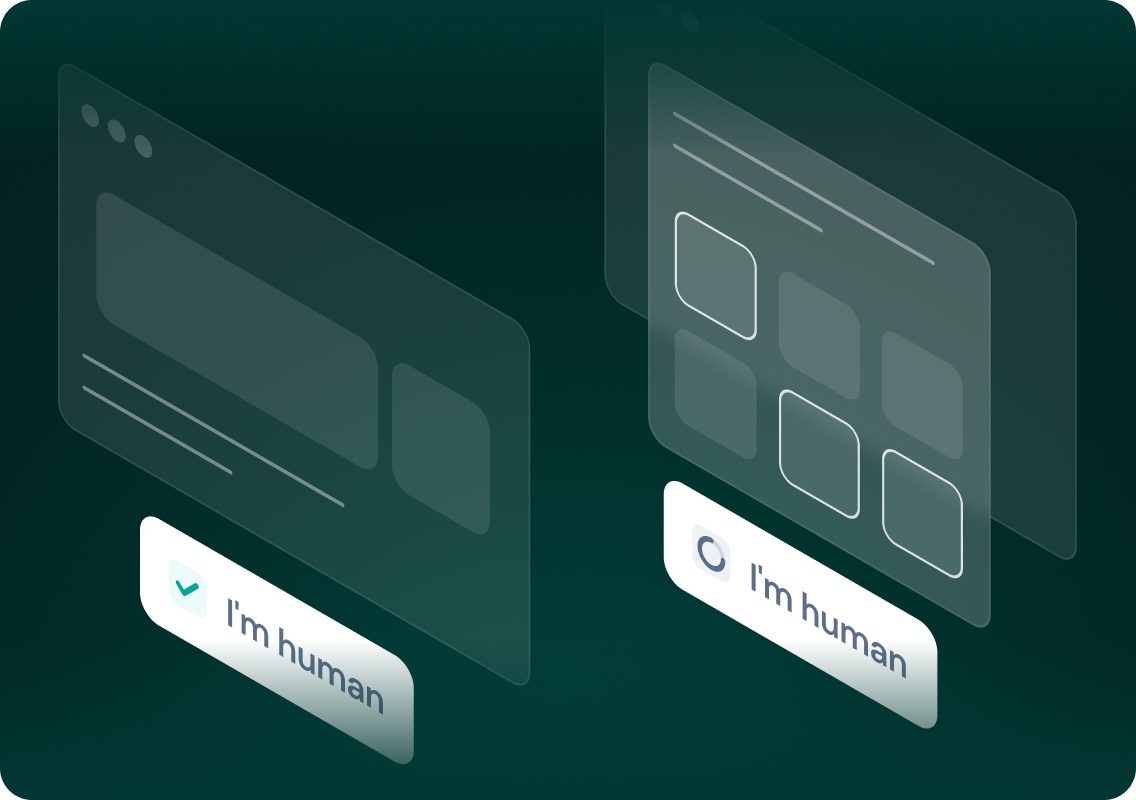
Risk-based policies can let lower-risk activity continue while
suspicious sessions receive a challenge, MFA step-up, rate limit, or
block. This reduces unnecessary friction for legitimate users while
applying stronger controls when the evidence supports them.